

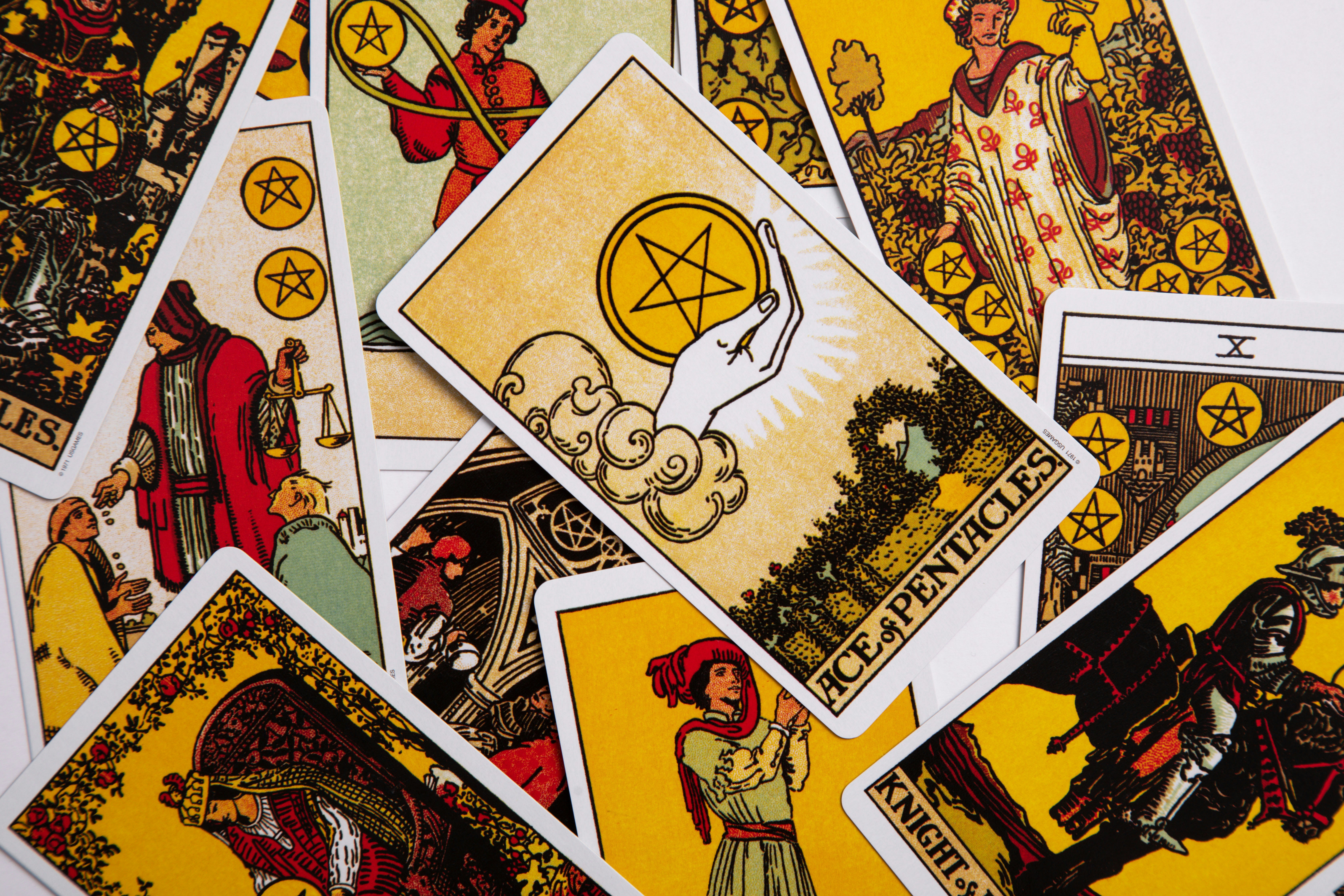
Welcome to PART I of my Divination and Writing Series where I will explore some divination methods to help your writing flourish. Today we’re looking at developing your novel as a whole.
Sometimes the problem with writing a novel (or anything, really) is clarity. You come to the table with idea after idea, but where do these ideas go and how will they play out in the narrative? Well, if you’re open to the idea, we can divine the answer using tarot.
You may have a compelling premise, a vivid protagonist, and even a few strong scenes. Then, somewhere in the process, the story begins to lose shape. The plot starts to feel mechanical. The emotional arc feels thin. The characters stop surprising you. What once felt alive begins to feel overly managed. At best, you’re getting really frustrated. At worst, you’re bored.
In an attempt to keep forging ahead, many writers turn to craft books, outlines, or revision checklists. Those tools matter. Even though these tools are valuable to writers, sometimes a story does not need more pressure. Sometimes it needs a different kind of access. Enter: The Tarot. 
Believe it or not, tarot can become a powerful tool for writers.
When used thoughtfully (and strategically), tarot can help you deepen character motivation, uncover hidden tension, strengthen themes, and reconnect with the emotional truth of your story. Don’t think that you have to hand your novel over to the cards. That is thoughtless. Tarot is about using symbolism and intuition to see the story more clearly. This sounds a lot like your writing process, doesn’t it?
Why tarot works so well for fiction writers
Tarot and storytelling have more in common than they first appear to and if you’re a seasoned tarot reader, you know exactly what I mean.
Both rely on symbols, archetypes, emotional tension, contradiction, and transformation. A tarot card rarely means only one thing. A good story works the same way. Beneath the visible plot, there is always a deeper layer of desire, fear, memory, conflict, and meaning.
That is why tarot can be so useful in the writing process. It gives you a symbolic language for exploring what your story is doing beneath the surface.
So, let’s look at the bigger picture. Tarot can be especially helpful when:
- your plot feels flat (which happens to the best of us)
- your character’s motivation is unclear
- the emotional pulse of the story feels weak
- you are stuck in the middle of a draft (ugh…)
- you know the themes could be deeper, but you’re stuck skimming the surface
- the boredom is setting in and distractions abound
In other words, tarot can help when logic has already taken you as far as it can, and the story needs something more intuitive. Let us get crafty, my friends.
What tarot can help you uncover in your novel
 Tarot is especially valuable during the early and middle stages of a book, when the story is still revealing itself.
Character motivation
Just like in any reading, a tarot pull can help uncover what a person truly wants beneath what they say they want. It can also reveal hidden fear, emotional wounds, self-sabotage, longing, denial, or inner conflict. This will help your characters feel like real people with depth and dimension.
Theme
Many novels carry a deeper question long before the writer can clearly name it. Tarot can help surface recurring emotional and symbolic patterns, which often point toward the true theme of the story.
Conflict
If your story tension feels weak, the issue may not be the external plot. Often, the real problem is an unresolved contradiction within the character or relationship. Tarot can help you find that pressure point.
Relationships
Tarot can bring surprising clarity to the emotional truth of a relationship. The dynamic between characters may look like romance on the surface, but underneath it may really be about imbalance, devotion, secrecy, guilt, mirroring, or power. Tarot can trigger a twist in your creative mind that has been waiting to be uncovered.
Plot direction
When you are unsure what should happen next, tarot can offer a fresh angle. Not a rigid answer, but a meaningful direction or vibe that helps the story move again.
Symbolism and atmosphere
Certain cards can deepen the mood, imagery, and symbolic fabric of the novel. This is especially useful for writers who want their work to feel layered and resonant rather than merely functional.
What tarot is NOT meant to do
Tarot works best as a creative lens. Don’t force it!
If you treat every card as an instruction you must follow, the story can quickly become forced or chaotic. You didn’t need the tarot to make a story that sounds forced. A strong novel still requires discernment, structure, revision, and craft. That is the same for a tarot reading of any sort. Leaving things up to the interpretation of a sharp intuition separates the mediocre readers from the elite readers. The cards are there to illuminate what may be hidden, not to take over the writing process.
A good way to think about tarot is this: it does not replace your role as the writer. It helps you ask better questions.
How to use tarot cards to develop your novel
You do not need an elaborate spread to begin. In fact, a simple approach is often more useful.
Choose one specific question about your story. Avoid asking something overly broad like, “Tell me about my  novel.” Instead, focus on one clear point of uncertainty.
You might ask:
- What is my protagonist refusing to face?
- What emotional truth is missing from this story?
- What energy defines the central conflict?
- What deeper meaning is trying to emerge through this plot?
- What is the real problem in the middle of this draft?
- What does the antagonist represent beneath the surface?
Shuffle with your question in mind and pull one card to start. Then pause before interpreting too quickly.
Ask yourself:
- What emotional energy is present here?
- What tension or contradiction does this card suggest?
- How might this apply to my character, theme, or plot?
- What in the story already resonates with this card?
- What may need to shift if this card is showing me the deeper truth?
The goal is not to force a perfect interpretation. The goal is to notice what becomes clearer about your story when you introduce the meaning of the card.
Lead by example
Imagine you are writing a novel about a woman returning to her hometown after years away. You know there is family tension. You know there is unfinished history. You know there is a relationship at the center of the story. But the protagonist still feels emotionally distant. You haven’t figured out what she cares about yet or how things  fit together in the first act.
You ask: What is my protagonist refusing to face?
You pull the Five of Cups.
That immediately suggests grief, regret, fixation on loss, or emotional paralysis. Now the story may begin to shift. Perhaps she is not simply reluctant to return home. Perhaps she is still organizing her life around something she never truly mourned. There are a lot of ways you could interpret this card in relation to the character’s situation. Don’t force anything to fit. Use what makes sense. You would be surprised by how truly fitting most of your pulls will be! 
You ask a second question: What energy defines the central relationship?
You pull Justice.
Now the relationship may be less about chemistry alone and more about truth, accountability, imbalance, or a long-overdue reckoning. This could indeed become a very sordid tale!
The cards did not create the story for you. They revealed a deeper layer of the story that was already trying to take shape. Get your messages and run with them.
Best tarot questions to ask at different stages of a novel
In the idea stage
- What is the heart of this story?
- What transformation is this novel asking for?

- What wound is driving the protagonist?
- What shadow energy is shaping the story?
During drafting
- What is the real source of tension in this chapter?
- What is this character not saying?
- What emotional truth needs more room on the page?
- What do I need to understand before writing the next scene?
During revision
- What is underdeveloped in this manuscript?
- Where is the story avoiding honesty?
- What part of the book holds the most energy?
- What needs to be released so the novel can become itself?
These questions keep tarot grounded in the writing process and make it far more useful than vague, abstract pulling.
Tarot and story structure can work together
Some writers worry that using tarot will make their process feel too unstructured. In practice, tarot often works best alongside a solid framework.
You can use beat sheets, outlines, scene cards, or revision plans and still use tarot to access deeper insight. Structure gives the novel shape. Tarot gives it resonance. I always plan out my acts and scenes first. I write as much as possible for what basic actions are necessary for each chapter. This stage is always a ROUGH draft. Then, I will pull a card for each chapter to get a general vibe. I have found that the cards generally match what I am going for in the chapter and help provide depth.
Another example, if you know your midpoint needs to matter more, tarot can help reveal the internal shift that should accompany the external event. If your climax is in place but feels emotionally flat, tarot can help uncover the deeper truth the protagonist must finally face.
 You do not have to choose between intuition and craft. The strongest writing usually needs both.
Final thoughts on tarot for writers
Writing a novel asks for more than technical skill. It asks for patience, perception, honesty, and the willingness to follow what is not fully visible yet.
Tarot can support that process in a meaningful way. Not because it replaces structure or craft, but because it helps you access the hidden motives, emotional undercurrents, and symbolic patterns that make a story feel alive.
If you are a writer who wants your work to feel both intentional and intuitive, tarot may become one of the most interesting tools in your creative practice.
Your story still belongs to you. The cards simply help you listen more closely to the place where inspiration speaks.
Support my work
If you are drawn to symbolic tools, intuitive writing, and deeper story work, Ninth House Moon is a place for writers who want to create with both craft and soul.
Explore more resources for writers, or begin by asking your story a better question.
Look for more tarot resources coming soon!

Leave a Reply